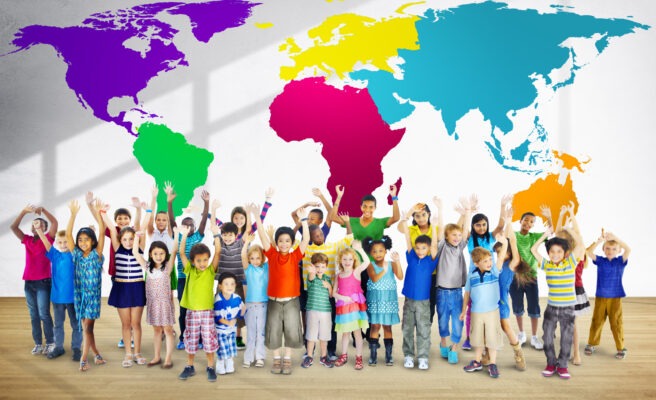
The developmental sciences have long relied on samples drawn mainly from high‑income, Western and highly educated populations, raising important questions about how far existing theories and findings generalise globally. Expanding this evidence base is a central aim of the Centre’s work on child and adolescent development in diverse international contexts.
We run sustained longitudinal research programmes across sub‑Saharan Africa, South Asia and other low‑ and middle‑income settings, using field‑portable neuroimaging methods — particularly fNIRS — alongside culturally adapted behavioural assessments.
This work examines how poverty‑related adversities such as undernutrition, environmental stress and limited stimulation influence early brain development and cognitive growth, and how protective factors within families and communities may buffer these effects.
Studying development across contrasting ecological contexts also allows us to identify which aspects of cognitive and neural development are universal and which are shaped by culture or environment.
A further priority is building local research capacity through collaborative networks and training partnerships, recognising that equitable global science requires leadership within the regions being studied.
We also conduct research with adolescents in sub‑Saharan Africa, investigating mental health, cognitive development and social functioning during this formative period. This work explores how socioeconomic adversity, family environments, education and community contexts shape wellbeing and developmental trajectories in rural South Africa and Uganda.
By using culturally sensitive and scalable approaches, the Centre aims to generate insights that can inform interventions and policies to support young people growing up in diverse low‑resource settings.