Annual Conference

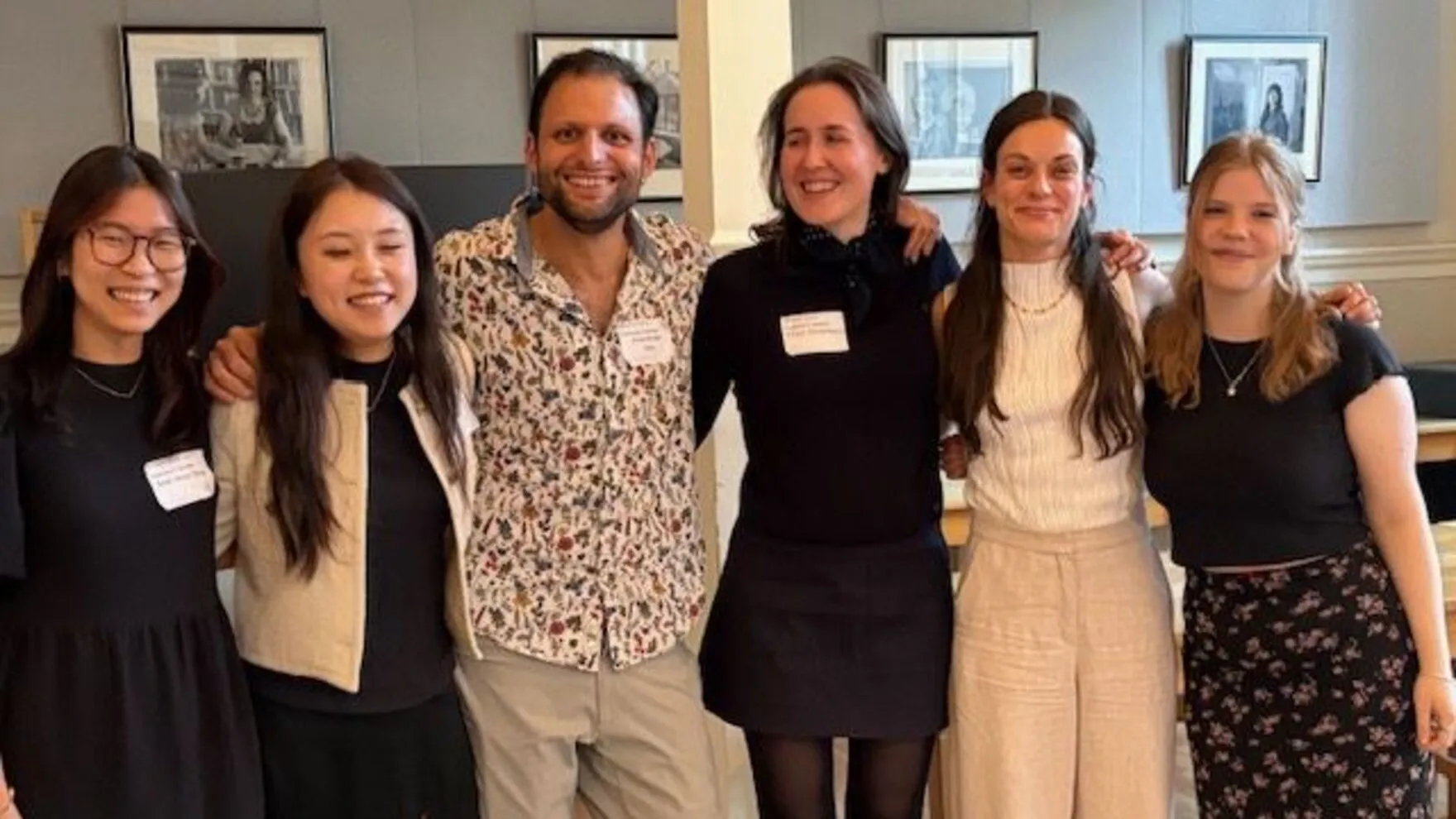
In 2025, we ran our inaugural Conference as a Centre. It was such a success, we decided to make it an annual event!

Our 2026 Conference took place on Thursday, 14th May, at Newnham College. Please explore the sections below, for details of our 2026 line-up and a re-cap from 2025.

Details for our 2027 Conference will be announced soon!

2026 Conference

Shaping Futures: Innovations in Research and Practice for Children and Adolescents.
14th May, 2026, 9:30am-6:30pm, Newnham College, Cambridge.

Keynote 1: The puzzle of self-regulation: developmental contexts to nurture it.

Kathy Sylva, University of Oxford

Abstract

This talk will explore self-regulation in early childhood, especially ways that families and nurseries support its development.

Self-regulation is a messy construct, broader than executive function and consisting of both ‘hot’ and ‘cold’ aspects. It enables children to exert control over attention, thinking, behaviour, social interactions and emotional reactions despite contrary impulses or distractions.

The talk will centre on three film clips: a father and daughter building a tower together at home, a preschool teacher helping children solve a conflict over a toy, and finally a child learning about physics and their own capabilities while playing alone on a balance beam.

The central question will be the contribution of guided play to children’s development, and the price society may pay for over-structuring the play of young children.

Interventions at home and preschool to support self-regulation will be critically discussed.

Speaker Bio:

Kathy Sylva is Professor of Educational Psychology at Oxford’s Department of Education and a fellow of Jesus College. She studies the effects of early education and care on children’s development.

She has conducted longitudinal studies as well as trials of interventions, working in the UK and LMIC contexts. She was Principal Investigator on the Effective Pre-school and Primary Education study (EPPSE), a study of 3000 children from pre-school entry to the end of compulsory schooling, which is the largest such study in Europe. She was co-director of the National Evaluation of Children’s Centres in England, (ECCE) a large scale study of the effects of early childhood services on family functioning and the development of  2,500 children.

Her intervention research has centred on improving child’s learning, especially language, literacy and behaviour. She led three randomised controlled trials evaluating interventions, including apps for parents. Together, the findings of these studies have directly informed policy and practice.

Kathy has been Specialist Adviser to Parliamentary Select Committees and has also advised The Treasury and Ofsted. She was awarded an OBE for services to children and families and the British Education Research Association’s Nisbett Award for outstanding lifetime contribution to educational research. She is a Fellow of the British Academy, the Academy of Social Sciences and the British Psychological Society.

Keynote 2: Co-creating father-inclusive policy and practice: research, innovation and commercialisation.

Anna Tarrant, University of Lincoln

Abstract

Research on fatherhood has reshaped understanding of men’s roles in families, highlighting the importance of fathers’ involvement in children’s lives and family wellbeing. Yet translating this evidence into sustainable changes in policy and multi-sector professional practice remains a persistent challenge.

This paper reflects on how a UK Research and Innovation Future Leaders Fellowship has helped bridge this gap by integrating research, innovation and commercialisation to embed father-inclusive policy and practice.

Drawing on work developed through the Fellowship, Anna explores how partnerships with fathers, policymakers, practitioners, and third-sector organisations have supported the co-creation of place-based models of father-inclusive support while generating new research. These insights have been translated into tools, training and organisational resources designed to support services to engage fathers more effectively and scale father-inclusive approaches nationally.

By reflecting on the opportunities and tensions involved in combining academic research with innovation and commercialisation processes, the paper considers how fellowships can act as catalysts for generating meaningful and lasting impact. In doing so, it demonstrates how co-produced research and innovation can productively reshape policy and practice landscapes to better recognise and support fathers’ roles in family life.

Speaker Bio:

Anna Tarrant is a Professor of Sociology at the University of Lincoln and Fellow of the Academy of Social Sciences.

She is the founder of the Centre for Innovation in Fatherhood and Family Research (CIFFR) and is in the seventh year of a UK Research and Innovation Future Leaders Fellowship.

She has expertise in fatherhood, family lives and social inequalities, with particular interest in the ways that policies and welfare systems shape the experiences of low-income families and marginalised fathers.

Through the Centre, she is leading research and commercialisation activities that promote father-inclusion as a transformation agenda, driven by innovations in participatory and longitudinal methods that effectively bridge the research, practice and policy interface.

Keynote 3: Innovations from research to practice for child anxiety disorders.

Cathy Creswell, University of Oxford

Abstract

The demand for effective interventions for mental health problems in children and young people far exceeds supply. In this talk I will use the example of child anxiety problems to illustrate how we have built on developmental clinical psychology research to innovate in ways that has increased access to effective psychological treatment.

This journey has taken us from underpinning work that highlighted the huge potential that comes from empowering parents and carers to support their children, to coproduction of digitally augmented approaches, and then to systematic evaluation of clinical outcomes, cost-effectiveness, and implementation.

I hope to highlight how child and family research can help us deliver effective treatments for families when they first need them.

Speaker Bio

Cathy is The Paul Professor of Developmental Child Psychology at the University of Oxford and Director of the Oxford Centre for Emerging Minds Research. She is also an Honorary Consultant Clinical Psychologist in Oxford Health NHS Foundation Trust, an NIHR Senior Investigator, a Fellow of the Academy of Medical Sciences, and a Senior Kurti Fellow at Brasenose College, Oxford.

She leads the NIHR Oxford and Thames Valley Applied Research Collaboration Mental Health theme and co-leads the Oxford Health NIHR Biomedical Research Centre Mental Health in Development theme.

Within the Department of Experimental Psychology at the University of Oxford, she is the Associate Head of Department for Research.

Her own research particularly focuses on the development, maintenance, and treatment of anxiety disorders in children. She has developed effective psychological interventions that are widely implemented within routine health settings, and has written a number of books for parents and clinicians to help families get effective support when they first need it.

Flash talks

Members of the Centre for Child, Adolescent and Family Research will present their research-in-progress, in just 4 minutes each!

We’ll also watch 3 videos recorded with participants in the SHAPE study, currently underway in the Hughes lab, here at the Centre.

Speakers

Akezhuoli Hailati

Blanca Piera Pi-Sunyer

Charity Somo

George Gillett

Xiwen Fu

Harvey Tilley

Laura Carnevali

Sara De Felice

Keynote 4: Fragile minds in a scary world: understanding and treating post-traumatic stress in young people.

Tim Dalgleish, University of Cambridge

Abstract

The majority of young people will experience psychological trauma at some point in their childhood or adolescence.

Historically, the accepted view for many years was that young people were generally resilient to the impact of such experiences. We now know that this is not the case.

Indeed, psychological trauma often has extremely debilitating consequences for young people with those most affected developing Post-Traumatic Stress Disorder (PTSD) and related conditions.

In this talk, Tim Dalgleish presents an overview of his and his colleagues’ work across the last three decades seeking first to understand the core nature of traumatic stress in children and adolescents and then using those insights to develop interventions to ameliorate their distress.

Speaker Bio

Tim Dalgleish is the Dawson Professor of Young People’s Mental Health at the Dept of Psychology in Cambridge (entre for Chid, Adolescent and Family Research). He also works as a practitioner in the NHS.

His research focuses on understanding and developing psychological preventions and treatments for common mental health problems, such as depression, anxiety, and post-traumatic stress, in young people.

He adopts a translational approach, seeking to utilise insights from basic cognitive neuroscience to enhance clinical interventions for these conditions.

His work employs a range of scientific methods from brain imaging through to the use of large-scale clinical trials.

Introducing the Mental Health Catalyst

Peter Templeton, The William Templeton Foundation For Young People’s Mental Health and IfM Engage

Speaker Bio

Peter Templeton is Executive Director, Strategic Development at IfM Engage. Peter has 25 years’ experience in manufacturing and manufacturing-related services.

Early in his career, Peter worked in chemical process design and operations; subsequently he developed a broad range of client-facing experiences with companies providing computer systems, software and services to the process manufacturing sector, encompassing systems for MRP II / ERP, Manufacturing Execution, Engineering Design and Supply Chain Planning and Execution.

He also leads the charity The William Templeton Foundation for Young People’s Mental Health.

Abstract

Depressed mood remains a major global challenge. While scientific understanding has advanced, translating research into real-world impact has been too slow.

The Mental Health Catalyst, supported by Wellcome and led by IfM Engage, exists to close this gap.

Our goal is to make depressed mood a short-lasting condition that does not affect lives in the longer term.

Peter will introduce work currently underway that uses a structured approach to accelerate the identification, development and adoption of more effective, scalable interventions.

Keynote 5: Childhood adversity and mentalizing: Evidence on addressing severe enduring mental ill health.

Peter Fonagy, UCL.

Speaker Bio

Peter Fonagy, CBE, is Professor of Contemporary Psychoanalysis and Developmental Science, and Head of Division for Psychology and Language Sciences at UCL. He is also Senior National Clinical Adviser for NHS England on Children and Young Peoples’ Mental Health. Peter is Honorary President of the Anna Freud Centre, after serving as CEO for over 20 years.

His clinical and research interests lie in early attachment relationships, social cognition, borderline personality disorder and violence.

A central focus has been an innovative research-based psychodynamic therapeutic approach, mentalization-based treatment, which was developed in collaboration with a number of clinical sites in the UK and USA. Peter has published over 800 scientific papers and 23 books.

Abstract

The lecture will summarize work over the past three decades focusing on the limitations of mentalizing in individuals with severe and enduring mental health problems often labelled complex.

Understanding the nuanced nature of challenges to mentalizing for people in this group has helped develop a therapeutic approach which now has a respectable evidence base.

The lecture will focus on the way a clinical approach can benefit from a theoretical understanding of the complexities of development for children, families and larger social systems.

Drinks reception

To round off the day, we’ll have a drinks reception in the lovely Newnham marquee and gardens, from 5:30-6:30pm.

We’ll have a selection of posters on display, highlighting some of the current work underway at the Centre.

2025 Conference

Building Blocks of Development: Innovations in Science from Research to Practice.
21st May, 2025, 9am-6pm, Newnham College, Cambridge.

Lorem ipsum dolor sit amet, consectetur adipiscing elit. Quisque luctus ipsum non elit tempor pretium. Donec interdum leo sit amet vulputate tempus. Suspendisse potenti. Quisque ut libero quam. Aenean nec sodales nisi.

Phasellus suscipit urna neque, in iaculis risus imperdiet eu. Vestibulum ante ipsum primis in faucibus orci luctus et ultrices posuere cubilia curae; Cras accumsan mauris ligula, sed dictum libero pretium sed. Phasellus vel risus in lacus aliquam scelerisque vitae a erat. Fusce dapibus lectus lorem, ut lacinia diam pulvinar ut. Duis placerat orci nisi, eget egestas lacus dictum non. Donec eros ex, pulvinar sed purus at, condimentum ornare dui.